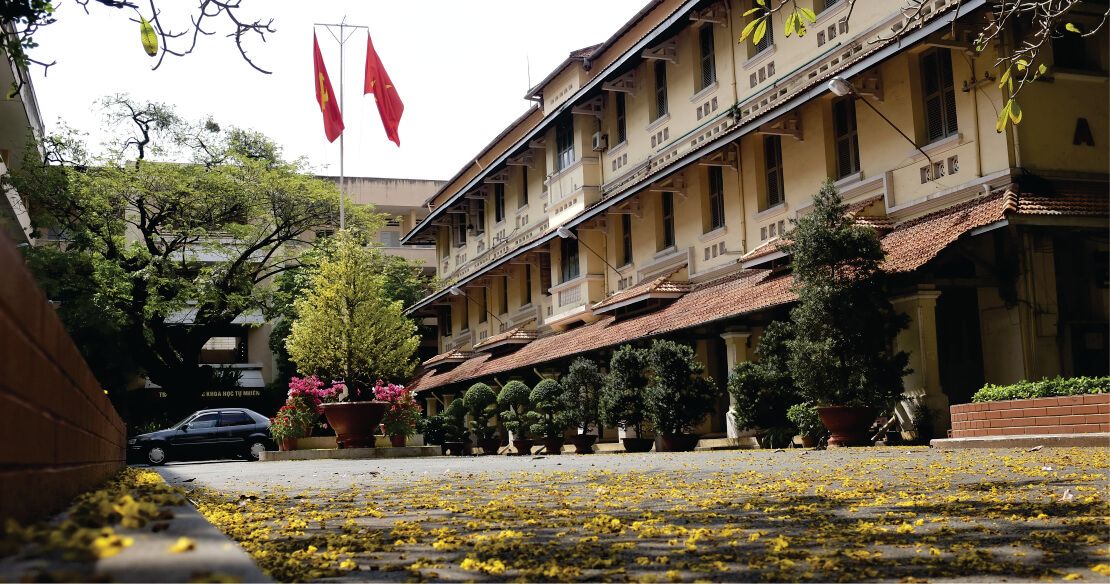
A series of academic topics opens up computational and AI approaches in researching new generation semiconductor materials
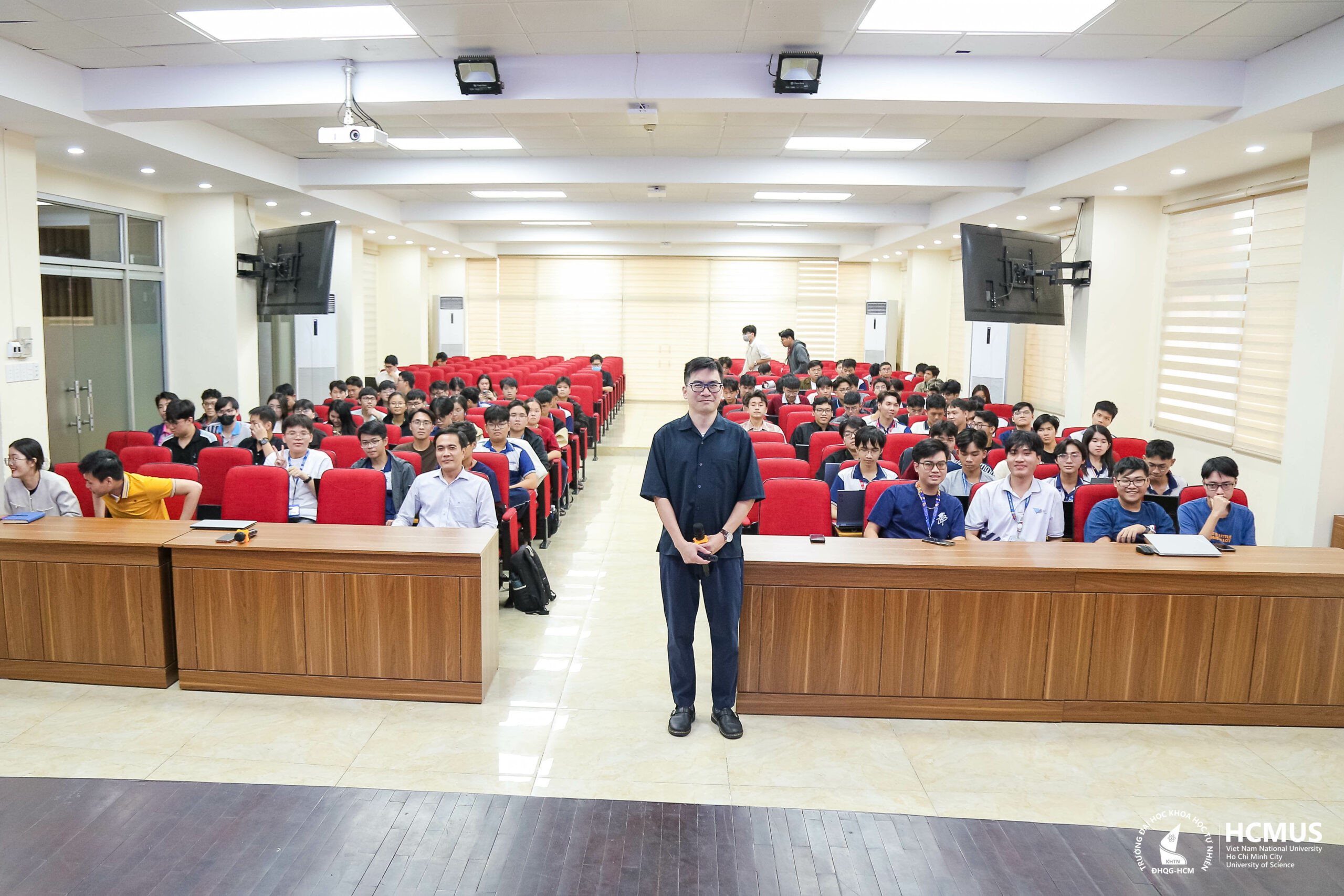
A Dynamic Academic Atmosphere at the Seminar Series on Simulation, Computation, and AI in Next-Generation Semiconductor Materials Research
Bridging Theory and Practice in Materials Research
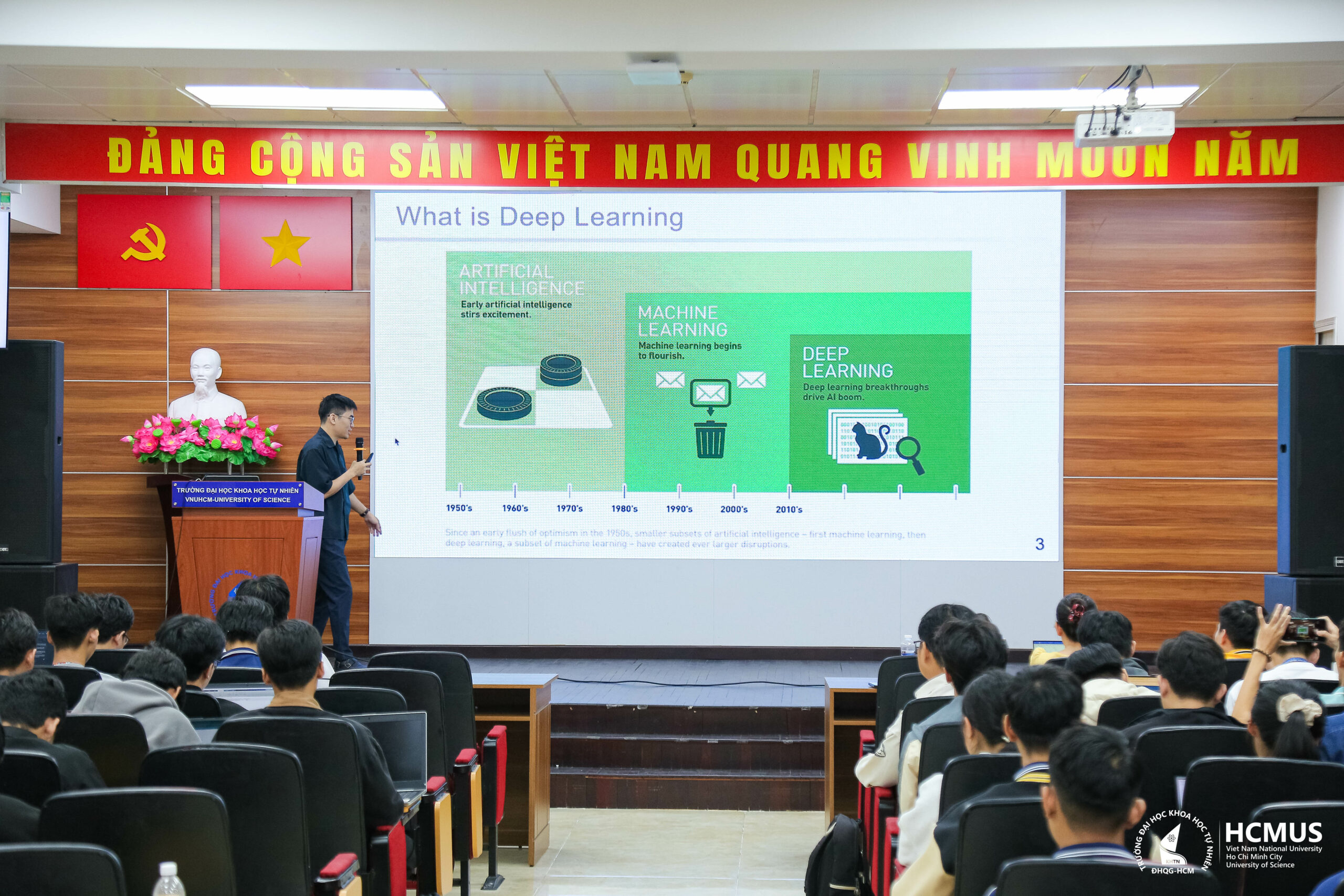
During the sessions, Dr. Nguyễn Tuấn Hưng systematized the fundamentals of Density Functional Theory (DFT)—a core tool for describing and predicting material properties at the electronic level—while also presenting approaches that integrate DFT with deep learning models to exploit data, identify materials, and develop predictive models in support of designing next-generation semiconductor materials.
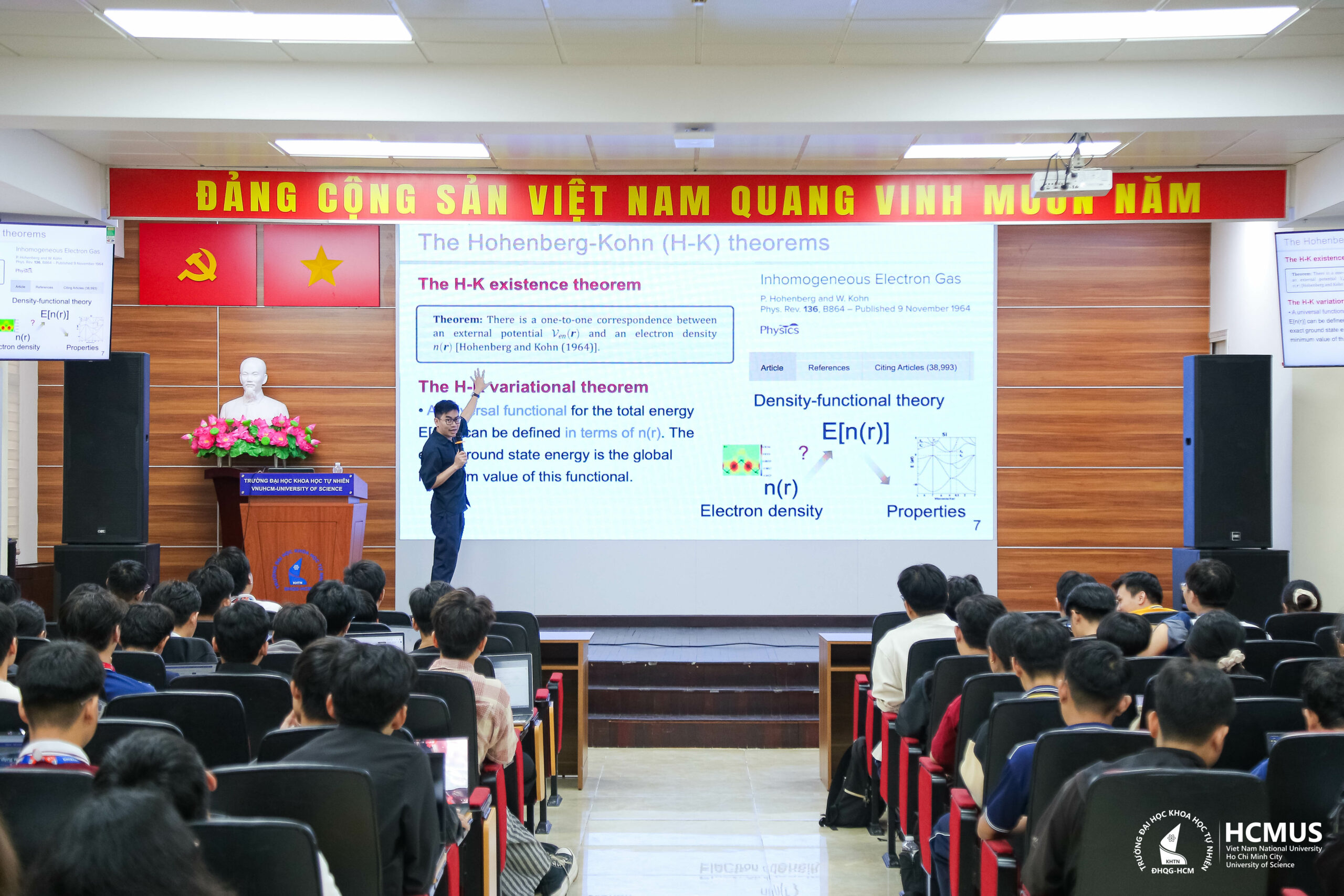
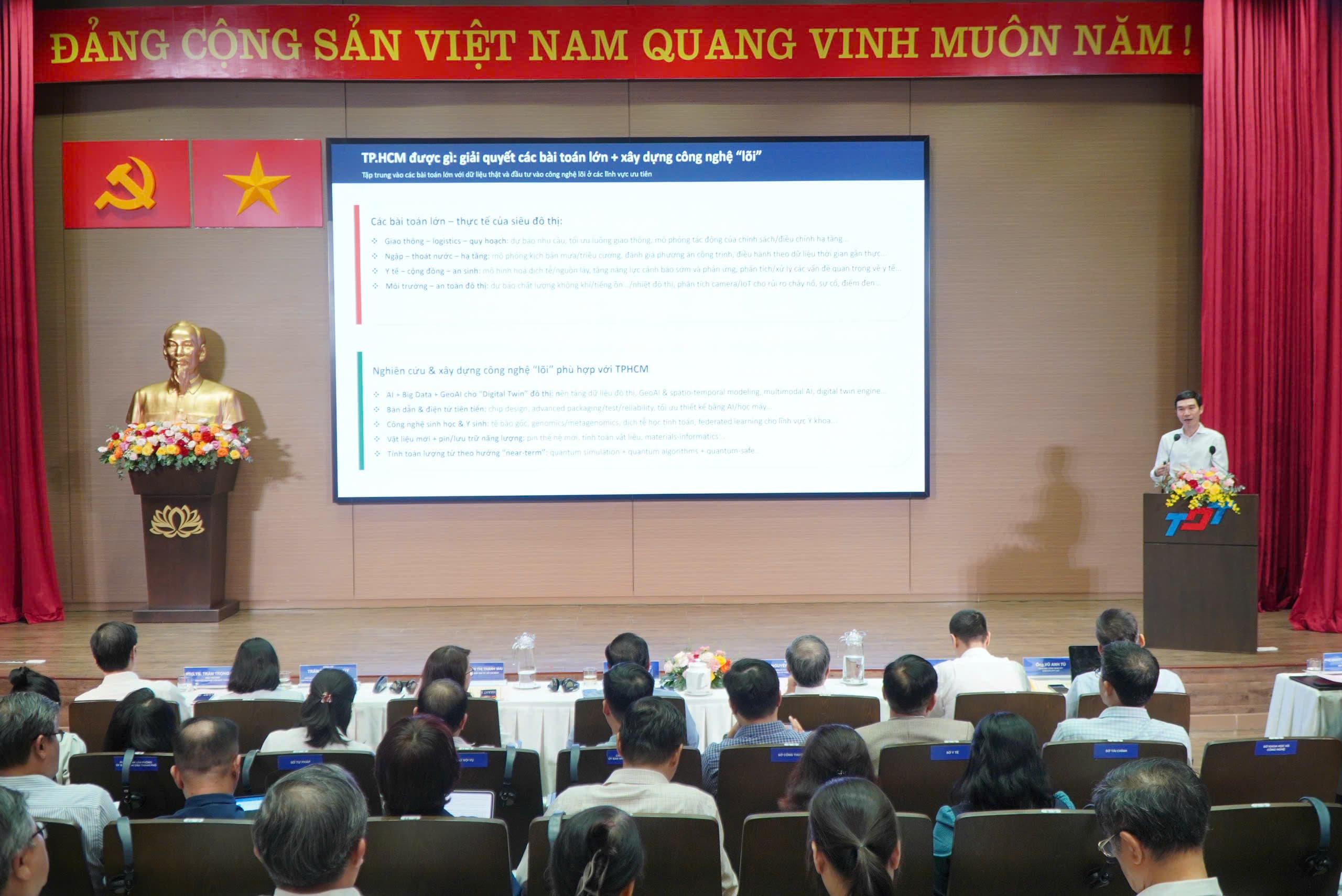
Dr. Nguyễn Tuấn Hưng (National Taiwan University) shared modern approaches that integrate DFT and deep learning in materials design.
Moving beyond theory, the program was designed as an accessible introductory pathway, guiding participants step by step from fundamental concepts to practical applications. Students and trainees engaged in hands-on practice with specialized tools such as Quantum ESPRESSO for DFT simulations and PyTorch for building deep learning models, through illustrative exercises closely aligned with real-world research workflows.
An Open Academic Exchange Environment
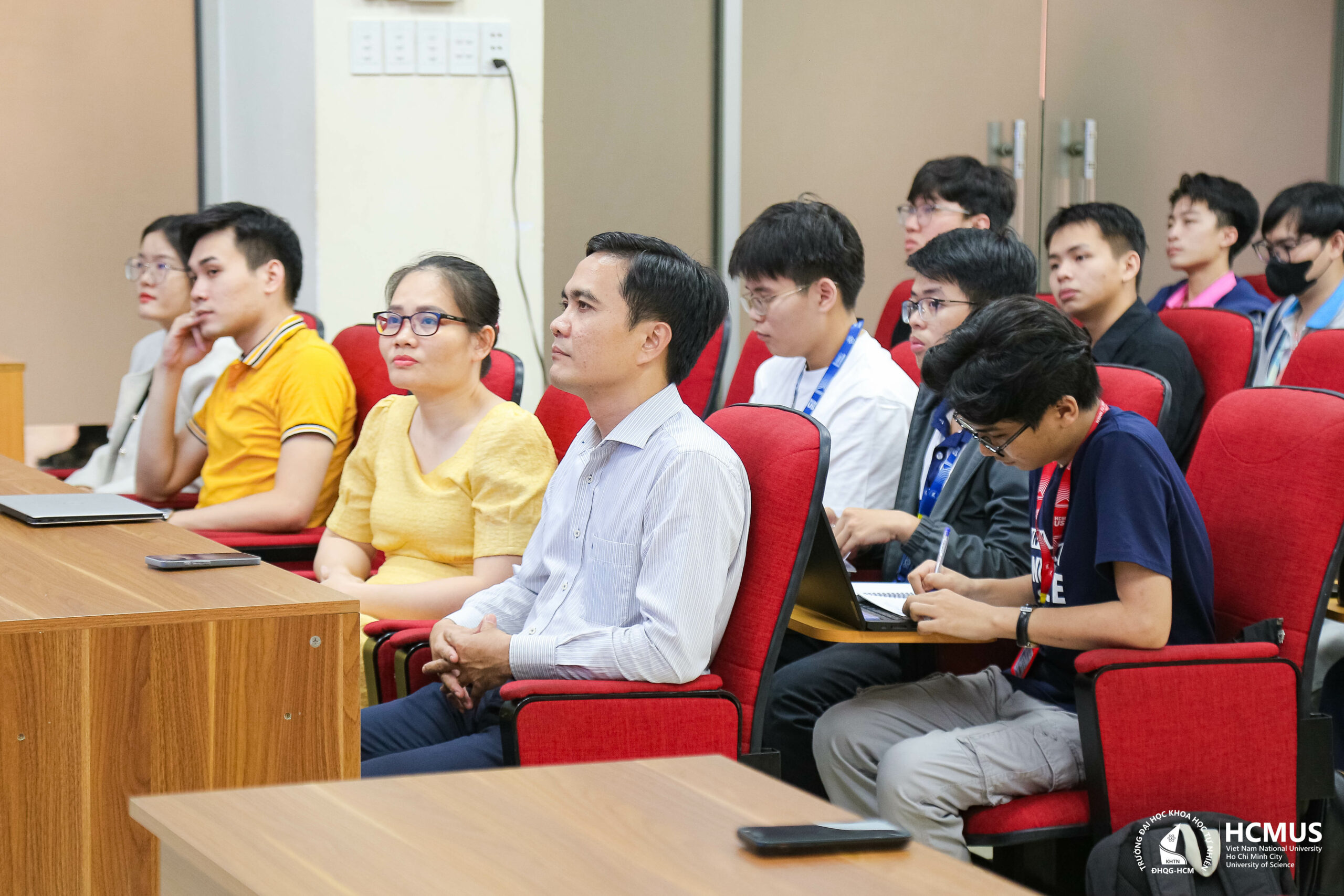
One of the highlights of the seminar series was the open academic exchange session, where participants had the opportunity to interact directly with the speaker on research directions, learning pathways, and emerging trends in AI-driven semiconductor materials research. Discussions centered on building foundational knowledge, selecting appropriate tools, and approaching international research topics, fostering a lively, practical, and highly engaging academic atmosphere.
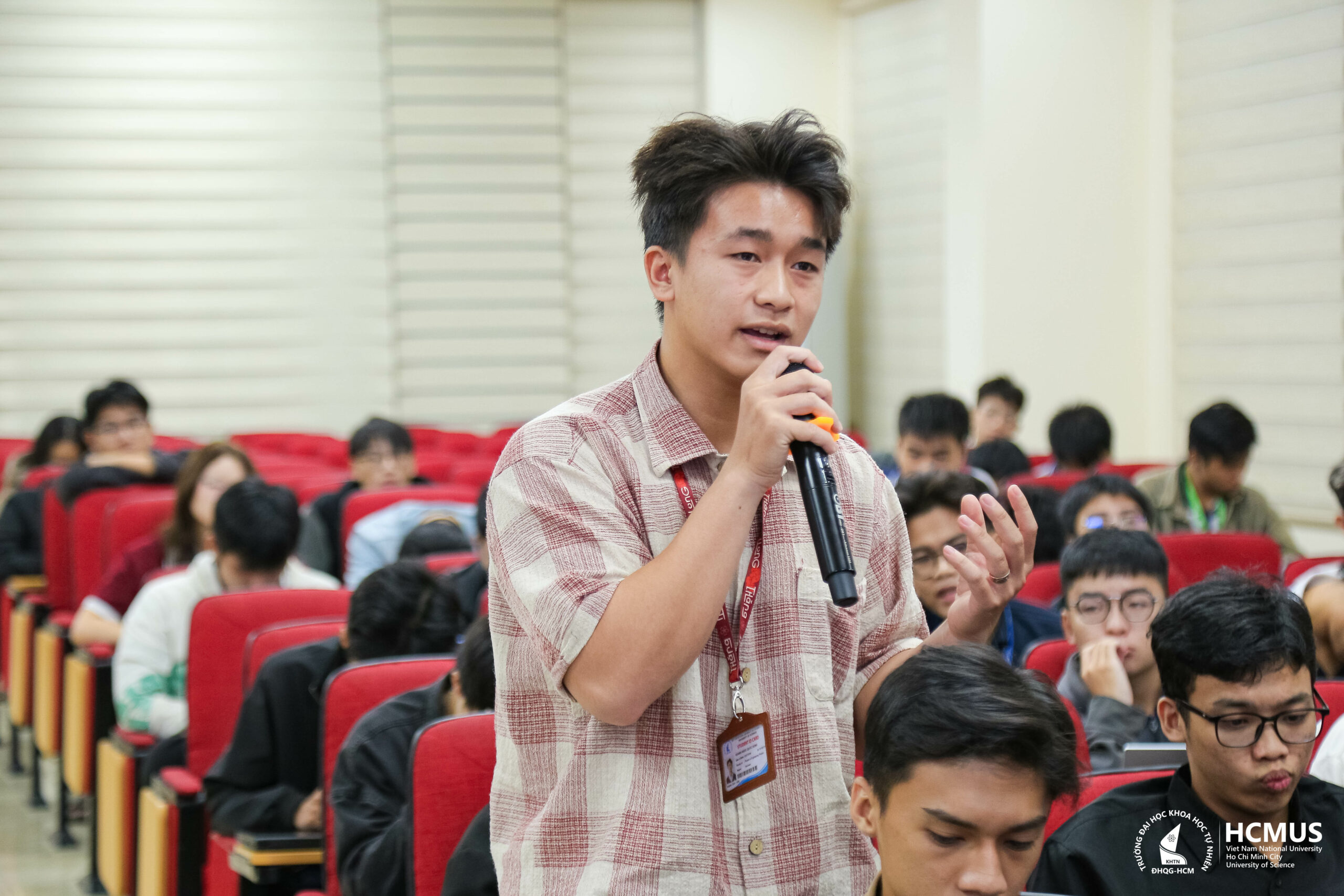
Students enthusiastically posed questions and interacted directly with the speaker.
The seminar series not only provided up-to-date knowledge but also offered a fresh perspective on interdisciplinary approaches in materials science, where physics, computation, and artificial intelligence converge to address complex challenges in semiconductor technology. Through these activities, the Faculty of Physics and Engineering Physics continues to affirm its role as a bridge between education, research, and international integration, helping guide undergraduate and postgraduate students toward engaging with cutting-edge research fields of the future.
![[Outstanding role models] The flame within the laboratory: a portrait of the youngest female professor of 2025 – Prof. Trần Thị Thanh Vân](/_next/image?url=https%3A%2F%2Fhcmus-storage.amiras.tech%2Fhcmus-website%2Fz7377159522268_4d5410dcedb3f17f9a547afdc14e2b50_c6e6253839.jpg&w=3840&q=75)