Proposed HPC/AI infrastructure: Data platform and core technology for the "super urban" problem of Ho Chi Minh City
At the conference “Enhancing the Role of University Presidents’ Councils in the ‘Mega-Metropolitan’ Region of Ho Chi Minh City,” Dr. Đinh Bá Tiến (University of Science, VNU-HCM) presented the “High-Performance Computing (HPC) / AI Infrastructure Investment” model, emphasizing it as a critical foundation enabling Ho Chi Minh City to address major urban challenges based on real-world, reliable data managed through a centralized governance framework.
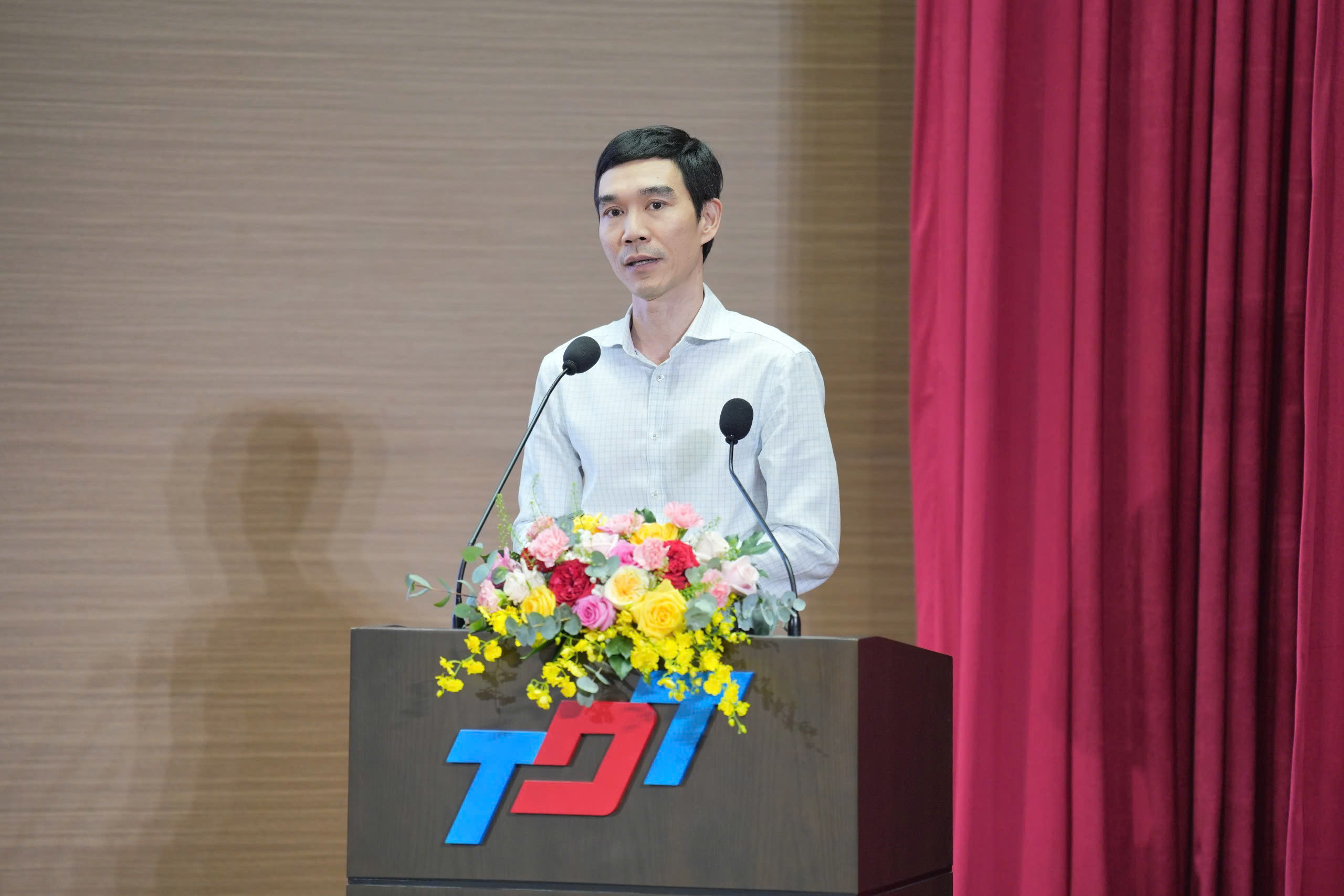
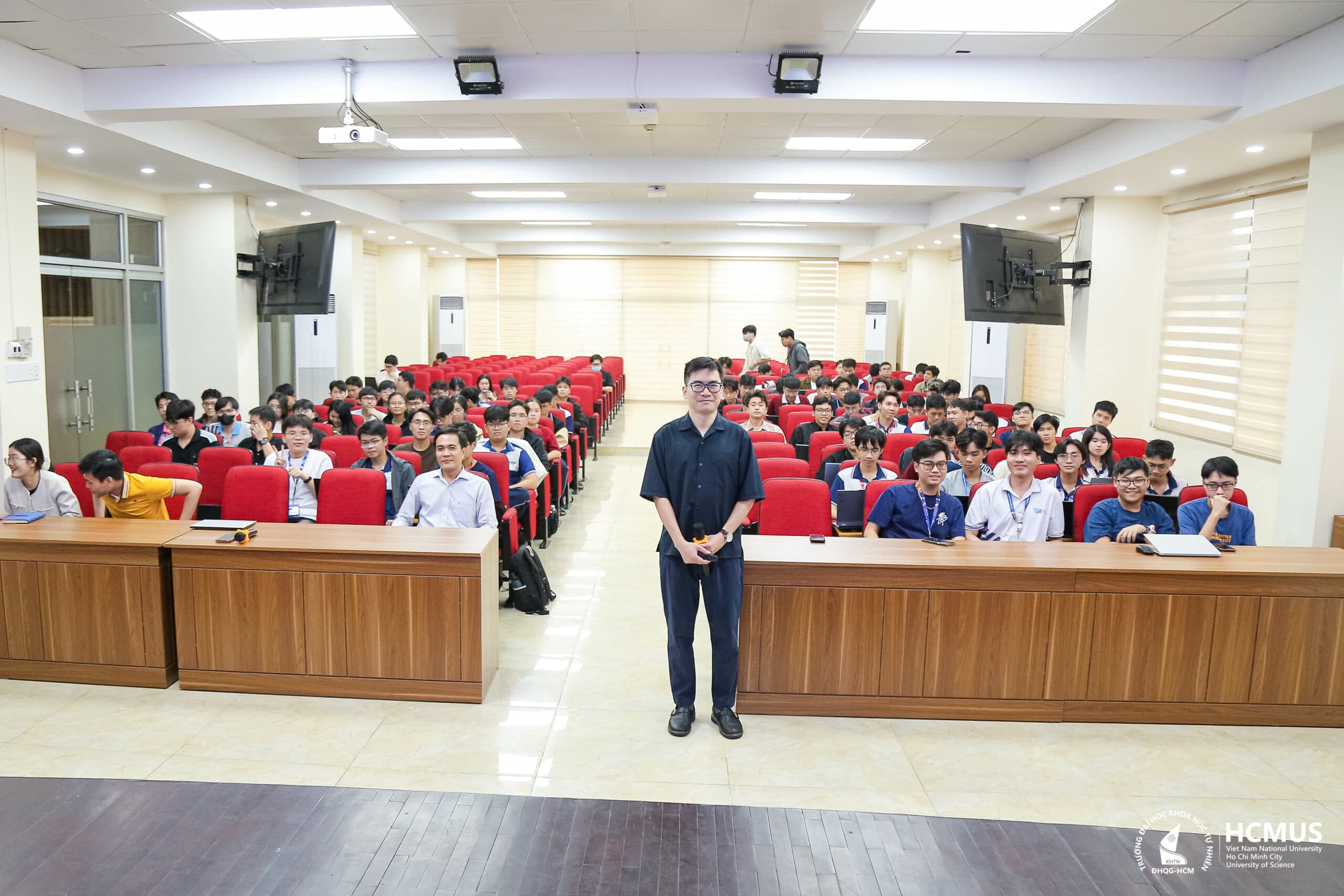
Dr. Đinh Bá Tiến (University of Science, VNU-HCM) presenting at the conference. Source: TDTU
According to Dr. Đinh Bá Tiến, Ho Chi Minh City is facing a range of complex, systemic, and interdisciplinary challenges, including transportation, logistics, urban flooding, healthcare, environmental management, and public safety. What these challenges share in common is their large scale, heavy reliance on multi-source data, and the need for advanced capabilities in computation, simulation, and analysis. Therefore, investment in high-performance computing combined with artificial intelligence (HPC/AI) has been identified as a core foundation for shifting from fragmented approaches to data-driven urban governance and management.
“The proposed model is designed as a shared platform between Ho Chi Minh City and VNU-HCM. In this framework, the City provides real-world urban management problems along with multi-disciplinary and multi-sectoral data sources, while VNU-HCM ensures in-depth research capacity, model building, simulation, and core technology development through its interdisciplinary experts, laboratory systems, and advanced research centers,” Dr. Đinh Bá Tiến explained.
The HPC/AI infrastructure is designed under an on-premise and hybrid model, meeting requirements for data security, governance, and legal compliance, while also allowing flexible scalability as computational demands increase. This approach enables Ho Chi Minh City to maintain control over sensitive data, reduce risks associated with dependence on external platforms, and optimize both investment and operational costs.
Notably, the HPC/AI model is accompanied by a three-year implementation roadmap. The first year focuses on establishing core infrastructure, building a trusted data zone, and deploying several pilot urban applications. In the second year, the system is scaled up, security is strengthened, operational procedures are standardized, and services are provided directly to municipal departments and agencies. By the third year, the HPC/AI infrastructure is developed into a fully integrated platform that connects with enterprises and startups, enabling proven solutions to be replicated and applied in real-world urban management and operations.
Dr. Đinh Bá Tiến emphasized that the distinguishing feature of the HPC/AI model lies in its close integration of research with the practical needs of Ho Chi Minh City. On this platform, major urban challenges can be simulated, analyzed, and scientifically validated using real data, thereby shortening decision-making timelines, reducing repetitive trial-and-error costs, and improving the reliability of solutions. Beyond research, the system’s outputs are designed for direct application in governance, urban operations, and policy planning.
Through investment in HPC/AI infrastructure, Ho Chi Minh City not only gains a powerful technical tool to support modern urban management, but also gradually builds mastery over core technologies in priority sectors—laying a long-term foundation for the development of science, technology, and innovation in the “mega-metropolitan” region.
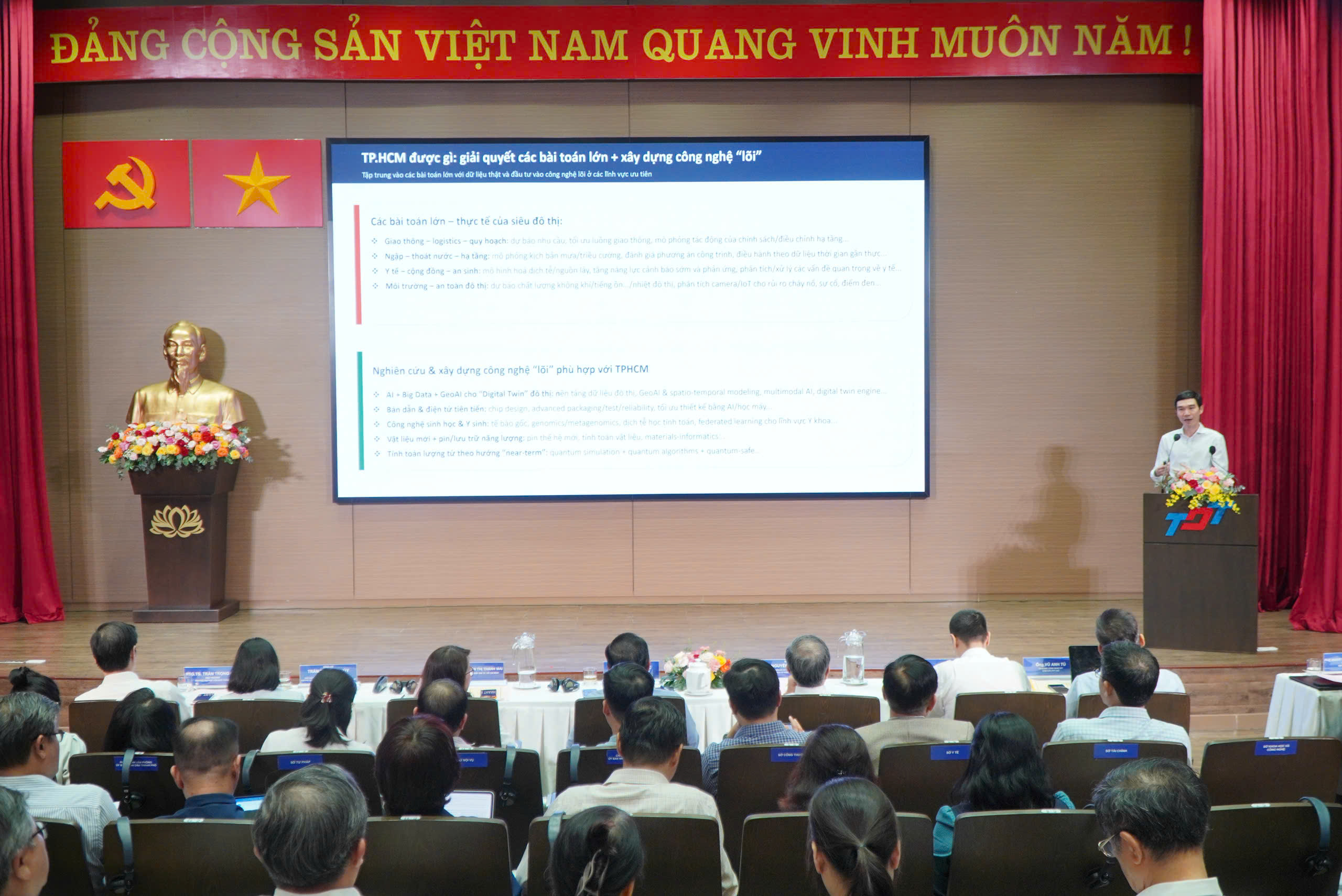
An overview of the conference “Enhancing the Role of University Presidents’ Councils in the ‘Mega-Metropolitan’ Region of Ho Chi Minh City.”
![[Outstanding role models] The flame within the laboratory: a portrait of the youngest female professor of 2025 – Prof. Trần Thị Thanh Vân](/_next/image?url=https%3A%2F%2Fhcmus-storage.amiras.tech%2Fhcmus-website%2Fz7377159522268_4d5410dcedb3f17f9a547afdc14e2b50_c6e6253839.jpg&w=3840&q=75)